Technical Specifications
Technical Specifications
Architectural Solid Wood Doors & Millwork Construction
Vitrossa Architectural Doors manufactures architectural solid wood doors and custom millwork engineered for commercial, institutional, hospitality, residential, and heritage projects. This section outlines our door construction methodology, material composition, wood species selection, and architectural detailing, supporting architectural specifications, shop drawings, and large-scale project requirements.
Our doors are designed as true stile-and-rail solid wood assemblies, delivering structural integrity, dimensional stability, and long-term performance for high-traffic and demanding environments.
Door Construction System
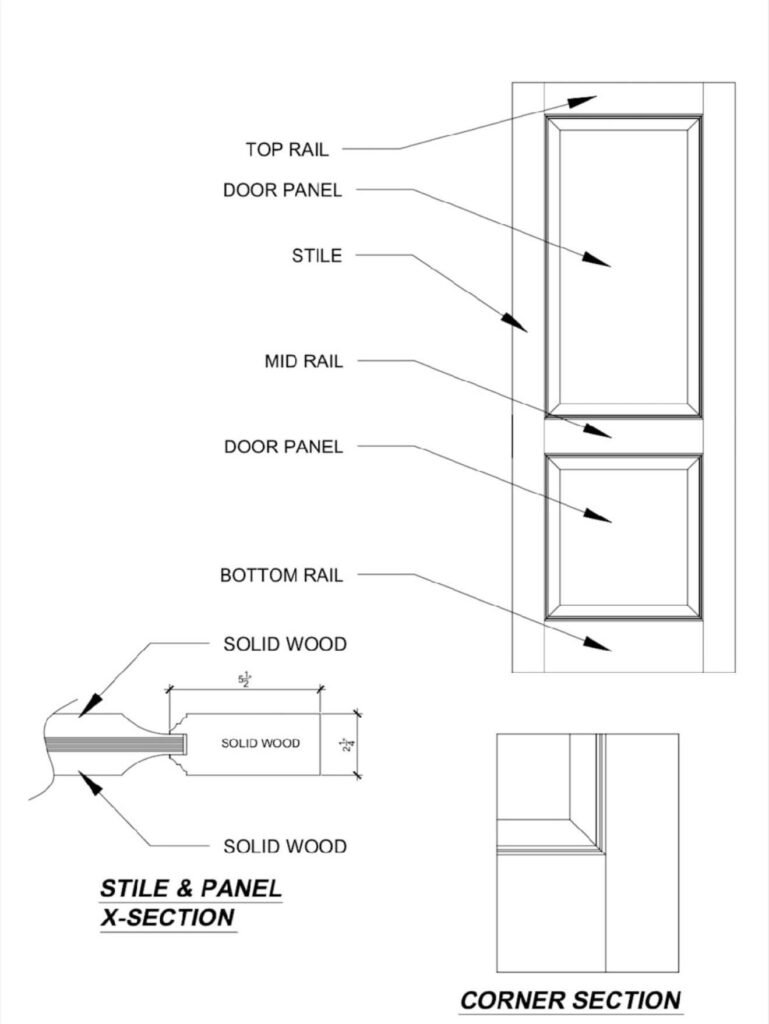
Stile & Rail Solid Wood Assembly
Vitrossa doors are constructed using a traditional stile and rail solid wood system, a method proven in historic churches, cathedrals, universities, and institutional buildings.
Primary structural components include:
- Top Rail – load distribution and rigidity
- Bottom Rail – impact resistance and long-term stability
- Vertical Stiles – primary structural support
- Solid Wood Panels – designed to allow controlled movement
- Mid Rails (when specified) – added reinforcement and proportion control
This construction allows the door to naturally accommodate seasonal wood movement while maintaining structural alignment, panel integrity, and surface consistency.
Cross-Section & Joinery Details
Solid Wood Profiles & Corner Construction
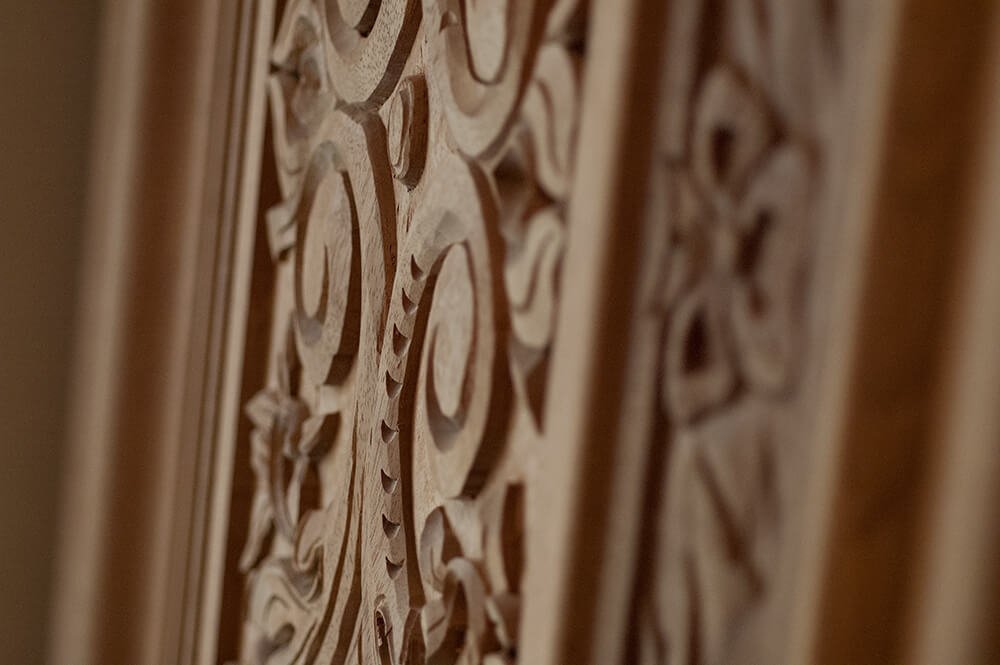
Vitrossa employs precision-machined solid wood profiles with full-depth joinery, ensuring strength and longevity across large projects.
Construction characteristics include:
- Solid wood profiles throughout
- Reinforced corner detailing
- Uniform material thickness
- Controlled tolerances for repeatable quality
This approach provides resistance to warping, twisting, and joint fatigue, making our doors suitable for commercial and institutional use.
Material Philosophy
Why Solid Wood Is Specified for Architectural Doors
Unlike veneer-based or engineered alternatives, solid hardwood doors provide:
- Superior structural longevity
- Authentic architectural depth
- Repairability and refinishing over time
- Compatibility with institutional and heritage standards
For universities, government buildings, churches, hospitality venues, and landmark projects, solid wood remains the preferred architectural solution.
Architectural Wood Species
Canadian & International Solid Hardwoods
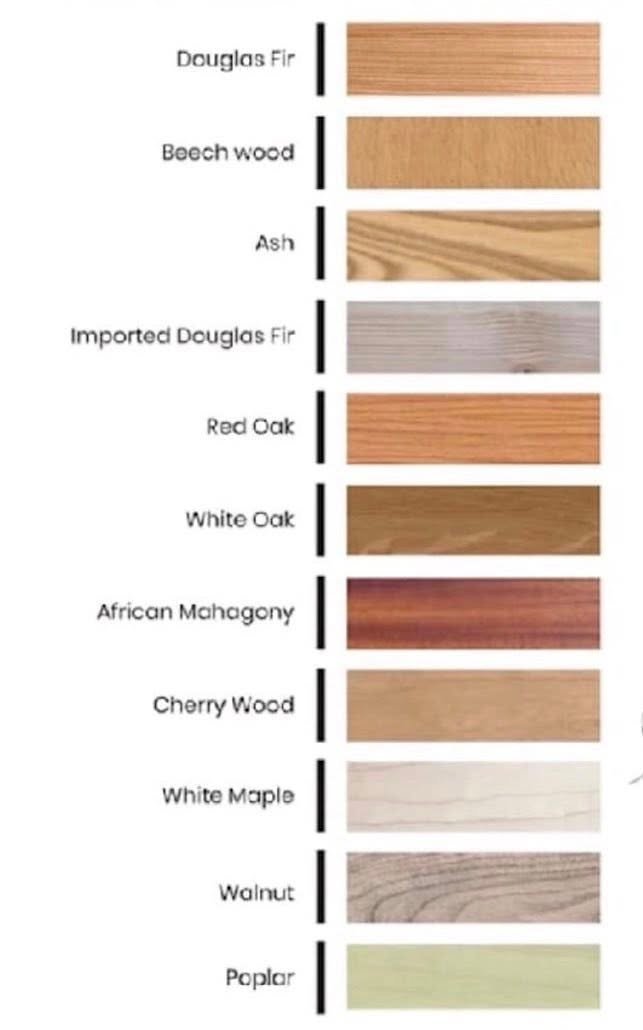
Vitrossa selects architectural-grade hardwood species based on density, stability, durability, and visual character.
Canadian Douglas Fir
Origin: Western Canada (British Columbia, Rocky Mountain region)
Douglas Fir is a cornerstone of Canadian architecture, historically used in institutional buildings, churches, heritage structures, and large public projects.
Characteristics:
- Straight, defined grain
- High strength-to-weight ratio
- Excellent dimensional stability
- Warm, timeless appearance
Ideal for large-format architectural doors, heritage restoration, and institutional projects.
Imported Douglas Fir
- Imported Douglas Fir Sourced from high quality forests, offering exceptional strength, stability, and consistent grain.
Poplar
- Stable, lightweight hardwood
- Cost-efficient for paint-grade applications
- Suitable for architectural millwork components
Walnut
- Deep, elegant grain structure
- Premium architectural material
- Common in executive, VIP, and signature spaces
White Maple
- Clean, light appearance
- High density and smooth texture
- Ideal for contemporary architectural doors
Cherry Wood
- Warm, refined tone
- Smooth aging characteristics
- Used in high-end residential and institutional interiors
African Mahogany
- Rich, deep coloration
- Stable and durable hardwood
- Traditionally specified for churches, luxury hotels, and civic buildings
Beech Wood
- Fine, uniform grain
- Smooth surface finish
- Ideal for precision millwork detailing
Ash
- Light-toned hardwood
- Excellent shock resistance
- Clean, contemporary architectural appearance
Red Oak
- Strong structural properties
- Pronounced grain pattern
- Commonly used in architectural paneling and millwork
White Oak
- Dense, durable hardwood
- Excellent wear resistance
- Suitable for high-traffic commercial and institutional environments
Environmental Context & Sustainability
Inspired by Canadian Forests
Vitrossa’s material philosophy is inspired by Canada’s forests and natural landscapes, emphasizing responsible sourcing and long-term architectural use.
Solid wood doors offer a sustainable solution when crafted for durability, repairability, and extended service life, reducing replacement cycles in large projects.
Applications & Architectural Support
Vitrossa Architectural Doors is specified for universities, government buildings, churches, heritage restorations, hospitality venues, commercial developments, and high-end residential projects.
We support architects, builders, and consultants with shop drawings, material samples, custom dimensions, and project-specific documentation, ensuring accuracy and consistency across large-scale architectural projects.