
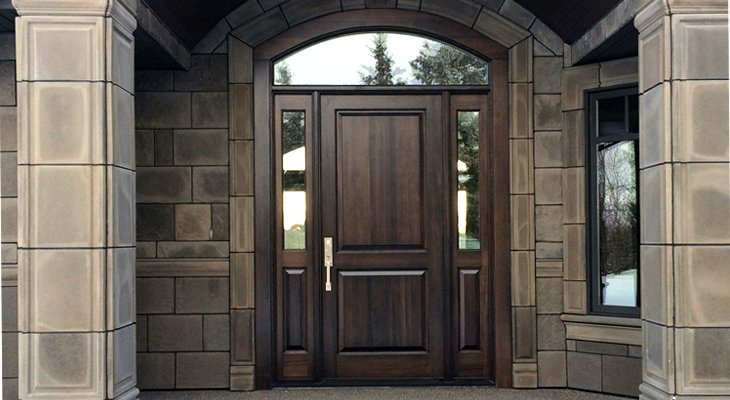
How to Choose the Right Front Door for Your Home
How to Choose the Right Front Door for Your Home
Choosing the right front door is one of the most important design and investment decisions for any home. Your front door is the first architectural element visitors see, and it plays a critical role in security, insulation, durability, and overall curb appeal.
Whether you are building a new home or replacing an existing entry door, selecting a high-quality, well-constructed front door can significantly increase both property value and daily living comfort.
In this guide, we explain how to choose the right front door for your home and what factors truly matter when investing in a premium entry system.
⸻
Why the Front Door Matters
A front door is more than an entrance. It serves as:
•A primary security barrier
•A major architectural focal point
•A key energy-efficiency component
•A long-term investment in your home’s value
Poor-quality doors can warp, crack, fade, or lose structural integrity over time. High-quality solid wood front doors, when properly manufactured, provide superior strength, stability, and visual richness.
⸻
1. Choose the Right Front Door Material
The material of your front door determines its durability, performance, and appearance.
Solid Wood Front Doors
Solid wood front doors remain the gold standard for luxury residential and architectural applications. They provide:
•Natural beauty and warmth
•Excellent strength and rigidity
•Custom shaping and detailing
•Superior repairability compared to composites
High-quality hardwoods such as White Oak, African Mahogany, Walnut, Maple, and Cherry offer exceptional performance for front entry doors.
Engineered & Composite Doors
Engineered doors combine wood layers or composite cores. They can offer dimensional stability but often lack the visual depth and longevity of true solid wood doors.
For homeowners seeking premium craftsmanship and timeless appearance, solid wood remains the preferred choice.
⸻
2. Select a Wood Species That Matches Your Climate & Design
Different wood species perform differently depending on climate and exposure.
Popular front door woods include:
•White Oak – highly moisture resistant
•African Mahogany – excellent exterior stability
•Walnut – rich luxury appearance
•Douglas Fir – strong and lightweight
•Maple – clean modern look
Choosing the correct wood species ensures long-term stability and prevents excessive movement, checking, or warping.
⸻
3. Decide Between Custom vs Standard Front Doors
Standard Doors
Standard-size doors offer limited design options and profiles.
Custom Front Doors
Custom front doors allow:
•Exact sizing
•Custom panel layouts
•Glass configurations
•Hardware integration
•Personalized profiles and moldings
Custom manufacturing ensures the door fits your opening perfectly and aligns with your architectural vision.
⸻
4. Consider Door Construction & Joinery
High-quality front doors depend heavily on construction techniques.
Look for doors that use:
•Precision-machined solid wood profiles
•Mortise-and-tenon joinery
•Laminated solid cores where required
•Reinforced stiles and rails
These construction methods provide superior strength and long-term performance.
⸻
5. Choose the Right Door Style
Your front door should complement the architecture of your home.
Common styles include:
•Modern / Contemporary
•Traditional / Classic
•Transitional
•Rustic
•Craftsman
Panel layout, glass placement, and profile thickness all influence the final appearance.
⸻
6. Glass Options for Front Doors
Glass can enhance light and visual interest while maintaining security.
Popular options include:
•Clear tempered glass
•Frosted or acid-etched glass
•Decorative insulated glass
•Wrought iron glass inserts
For exterior applications, insulated double or triple glazing is recommended.
⸻
7. Energy Efficiency & Insulation
A high-quality front door should minimize heat transfer.
Key features:
•Tight perimeter sealing
•Weatherstripping systems
•Properly engineered cores
•Insulated glass units
These features improve comfort and reduce energy loss.
⸻
8. Hardware & Locking Systems
Premium front doors should be paired with high-quality hardware:
•Multipoint locking systems
•Heavy-duty hinges
•Premium handlesets
•Concealed closers (optional)
Hardware plays a major role in security and daily usability.
⸻
9. Finish Quality Matters
The finish protects the wood and defines appearance.
Professional finishing includes:
•Multi-stage sanding
•Sealer application
•Stain or paint layers
•Protective topcoats
High-quality finishes resist moisture, UV exposure, and surface wear.
⸻
10. Work with a Specialized Wood Door Manufacturer
Not all door manufacturers specialize in solid wood architectural doors.
A specialized manufacturer provides:
•Material expertise
•Engineering support
•Custom design capabilities
•Consistent quality control
This ensures your front door performs as beautifully as it looks.
⸻
Why Homeowners Choose Vitrossa Architectural Doors
At Vitrossa Architectural Doors, we design and manufacture custom solid wood front doors for residential and architectural projects across North America and international markets.
Our manufacturing process combines traditional woodworking craftsmanship with modern precision machinery to deliver doors with:
•Structural integrity
•Tight joinery
•Premium finishes
•Long-term stability
Each door is built to order based on your project specifications.
⸻
Final Thoughts
Choosing the right front door requires careful consideration of materials, construction, design, and manufacturing quality. A well-built solid wood front door offers unmatched beauty, durability, and architectural impact.
If you are planning a new home or replacement project, investing in a custom solid wood front door ensures long-term value and performance.